Short answer: for most sunny Paradise Valley and Scottsdale entries, a security screen door is the safer pick, because it lets air move and lets you leave the front door open behind a locked screen. A glass storm door can trap heat against the entry door: JELD-WEN says that in hot climates a storm door "may not be a good choice." If you want one anyway, choose a vented or retractable-screen model, check your entry door's warranty first, and get HOA approval before you order.
Storm door, screen door, security door: what's the difference?
People use these names loosely, and many shops sell all three, so it helps to know what you're comparing:
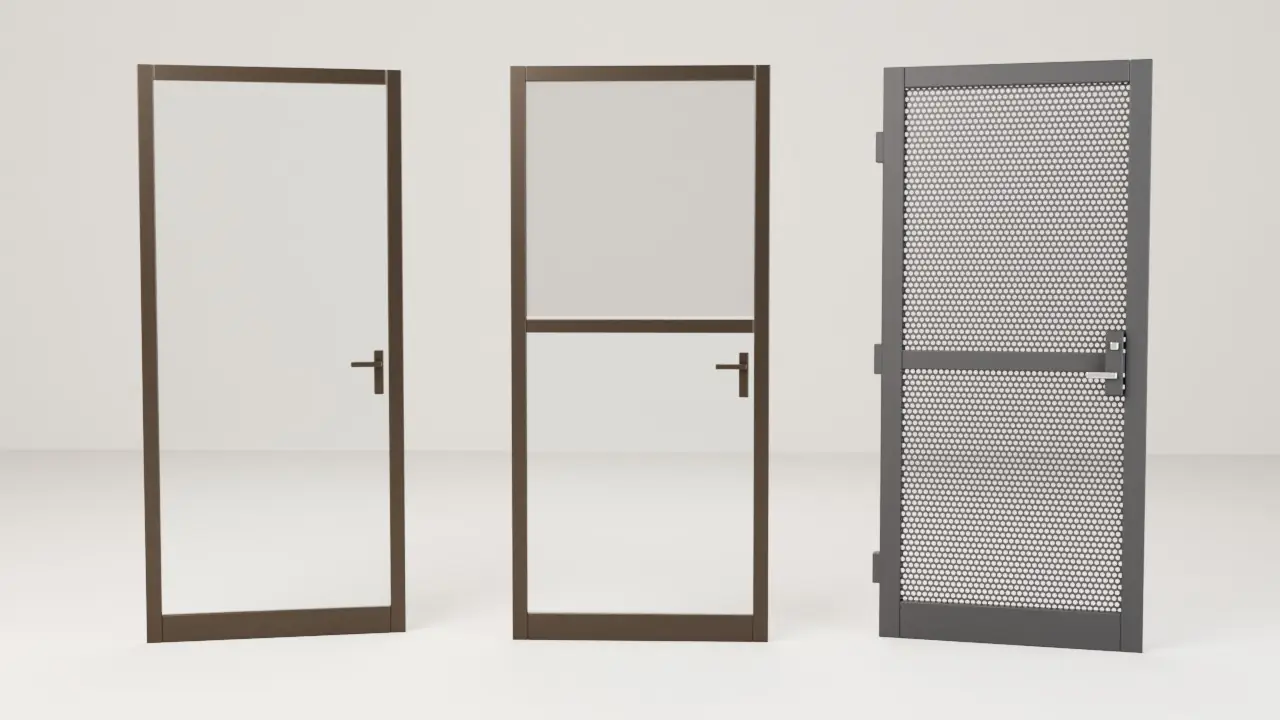
- Full-view storm door: a light aluminum or composite frame with one large glass panel. Some have an interchangeable screen panel. It mainly protects the entry door from wind and rain.
- Ventilating storm door: glass on the bottom and a screen on top, or a glass panel that slides down to open the screen. Larson's built-in Screen Away® retractable screen is one example.
- Security screen door: a heavier steel or aluminum frame with a perforated steel or woven stainless steel screen instead of glass, plus a lock and deadbolt. In the Valley this is the most common choice, because you can open the front door for evening air while the screen stays locked.
- Plain screen door: a light screen frame with no real security function.
The desert problem with glass storm doors: trapped heat
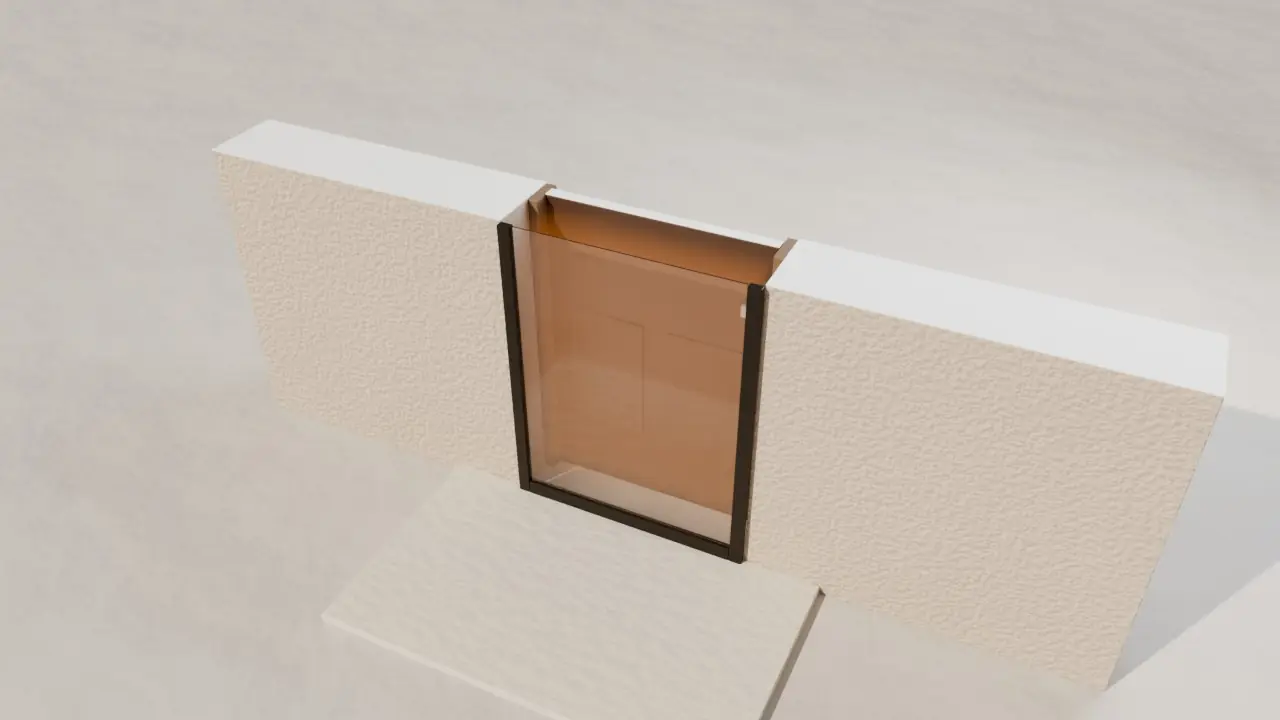
A glass storm door closes off a pocket of air between itself and your front door. In full sun, that pocket heats up, and the entry door sits right in it. Door makers are blunt about it:
- JELD-WEN says in its door protection guidelines that "in hot climates, adding a storm door may not be a good choice," because heat builds up between the two doors and can cause warping, color fading and wood joint separation. A storm door in front of a dark entry door "can accelerate heat build up even more," and storm doors for these spots "should be vented."
- Therma-Tru says in its warranty FAQ that a properly installed and properly vented storm door won't void its door warranty, but it isn't responsible for damage the storm door causes to its door. Its limited warranty adds that its PVC lite frames aren't recommended behind a storm door, or painted dark colors, in direct sunlight.
- Larson, which makes storm doors, lists "heat build up" in its full-view door troubleshooting guide and says the fix is to raise the expander or use the screen so air can circulate.
The JELD-WEN guide also gives a quick test: if you can't hold your hand on the face of the door for more than 30 seconds, the door is too hot. Try it on a summer afternoon before you decide.
Which way does your entry face?
Orientation matters more than brand. JELD-WEN's chart for desert climates calls for an overhang twice as deep as the height from the threshold to the overhang on south- and west-facing doors, and half that on north- and east-facing doors. Many Paradise Valley and Scottsdale front doors sit under a deep covered entry, and those are the best candidates for any glass storm door. A west-facing door with no overhang is the worst case. We explain the overhang math in our guide to the best front door material for Arizona sun.
If you still want a storm door
A storm door can still make sense on a shaded entry, or when you want a glass panel for dust and wind during monsoon storms. To keep heat and warranty problems down:
- Pick a model that vents. A ventilating door, or one with a retractable screen, lets you open the top on hot days. That's the fix both JELD-WEN and Larson point to.
- Check the entry door's warranty first. Ask your dealer to confirm that the combination is acceptable to the entry door's maker, especially for dark-painted doors or doors with PVC glass frames.
- Ask about Low-E glass if it's offered. Low-E glass cuts some of the sun's heat, but it doesn't stop a closed storm door from getting hot.
- Skip aftermarket film. Larson's warranty excludes customer-applied tints and films.
- Mind monsoon wind with retractable screens. Larson's retractable screen instructions say its retractable screens are for low-wind conditions and shouldn't be left open or exposed to wind, sun or rain. Close them before a storm blows in.
What to look for in a security screen door
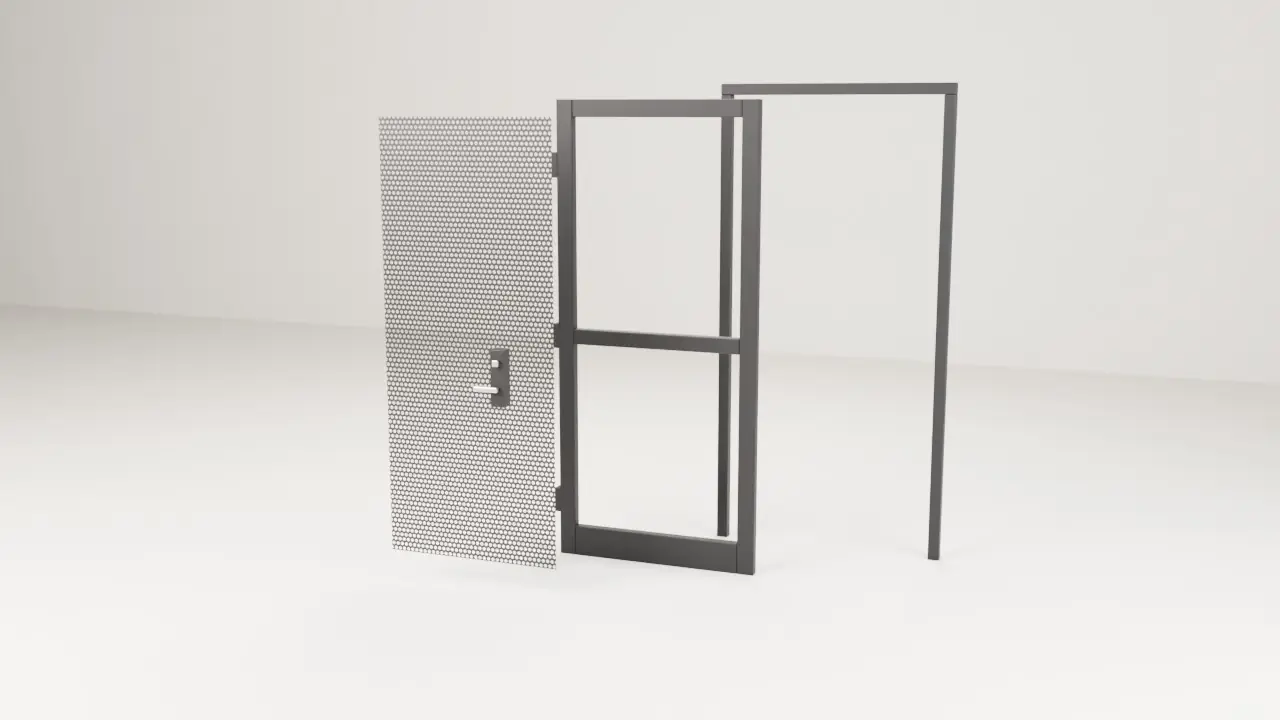
Security screen doors vary a lot, and the screen panel is only one part of it. When you compare quotes, ask about each piece:
- Frame: steel or heavy aluminum, and how the corners are joined. A heavier frame is harder to pry or bend.
- Screen: perforated steel or woven stainless steel mesh. Ask how it's held in the frame, since the attachment matters as much as the screen. Look at samples in person, because the hole or weave size changes how much you can see through it and how much breeze gets in.
- Mounting: the door should hang from a mounting frame fastened into the door jamb or framing, not just into stucco.
- Hinges: three or more heavy hinges, with tamper-resistant screws or pins on the outside.
- Lock: a keyed deadbolt outside and hardware you can open from inside without a key (see the code notes below). Ask whether the lock lines up with your entry door's handle so the two don't hit.
- Closer and sweep: a closer that keeps the door from slamming in wind, and a bottom sweep that keeps out dust and insects.
- Color and finish: powder-coat finishes in colors your HOA allows (more on that below).
Storm door vs. security screen door at a glance
| Glass storm door | Ventilating storm door | Security screen door | |
|---|---|---|---|
| Main job | Shelter the entry door from weather | Weather shelter plus fresh air | Airflow with the entry locked |
| Heat on a sunny entry | Can trap heat against the front door | Less, when vented | Open screen lets air move |
| Security | Basic latch, sometimes a deadbolt | Basic latch, sometimes a deadbolt | Heavier frame, screen and deadbolt |
| Best fit here | Deeply shaded or north/east entries | Shaded entries, if you want glass for dust | Most sunny Valley entries |
| Check first | Entry door warranty, HOA rules | Entry door warranty, HOA rules | HOA design and color rules, lock type |
Code points: exits, steps and pool doors
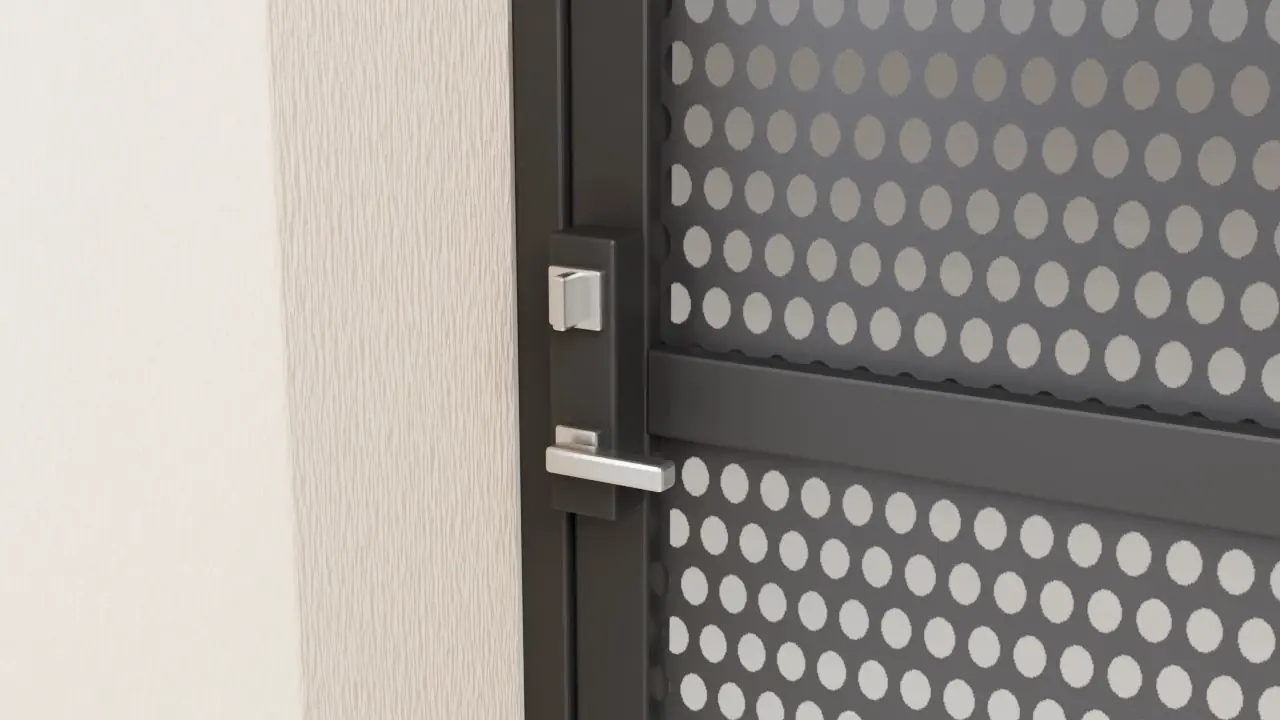
- Opening from inside: the International Residential Code section on egress doors (R311.2) says the required egress door must be "readily openable from inside the dwelling without the use of a key or special knowledge or effort." A security door with a key-only lock on the inside can work against that, so ask for a thumb-turn or lever inside, and ask your building department if you're unsure.
- Steps outside the door: the IRC generally doesn't let the main door swing over a step, but section R311.3.3 says "storm and screen doors shall be permitted to swing over exterior stairs and landings."
- Doors to a pool: if the door opens toward a pool, Scottsdale's pool barrier rules apply to the doors that lead there. Our guide to replacing a slider with French doors summarizes the city's door alarm and self-closing options.
Permits
The City of Scottsdale's Home Improvement page lists which projects need a permit. It puts glass and hardware in the no-permit group and window replacement under a Minimum Window/Door Permit, but it doesn't list storm or security screen doors either way, so confirm with the city before work starts. In Paradise Valley, applications go through the Town's Citizen Portal; ask the Building Division whether your project needs one. If you're replacing the entry door at the same time, see Do you need a permit to replace windows or doors?
HOA rules for storm and security doors
Front doors face the street, so design review committees look closely at anything mounted in front of them. Some examples from official community documents:
- McDowell Mountain Ranch: security doors must be simple, minimally ornamented and compatible in color with the house, with a photo or brochure in the submittal. Aluminum storm doors and screen doors are prohibited.
- Windgate Ranch: security doors must be a simple ornamental-metal design in matte black, low-luster brown or a complementary color, and screen mesh must be matte black or matte brown.
- Grayhawk: no exposed metal, including wrought iron, is allowed on doors or windows, except security doors the architectural committee approves.
- McCormick Ranch: the MRPOA's Executive Director can approve front door, security, screen and iron door replacements at staff level, after your sub-association approves.
If your Paradise Valley neighborhood has an HOA or deed restrictions, check them the same way. Our HOA window and door rules by community page collects the rules we've verified.
Questions to ask a dealer
- Is this a storm door, a security screen door or a plain screen door, and what's the frame made of?
- Does my entry door's maker allow a storm door in front of it, given which way my door faces?
- How does this door vent heat on a summer afternoon?
- What's the screen made of, and how is it fastened to the frame?
- What does the door mount to, and how many hinges does it have?
- Can it be opened from inside without a key?
- What colors are available, and will you provide the brochure or photo my HOA wants?
- Does my city or town need a permit for this, and who applies for it?
Get matched with a dealer
Lux Views Co. is a free referral service. We don't sell or install doors; we connect Scottsdale and Paradise Valley homeowners with independent, licensed dealers. If you're weighing a storm door, a security screen door, or a new front door to go with it, fill out the short form below and we'll match you with a participating dealer. For the door itself, see our door replacement page and the pivot front door guide.
Sources
- JELD-WEN: Door protection guidelines (storm doors, overhangs, color)
- Therma-Tru: Warranty FAQ, Limited lifetime warranty (PDF)
- Larson: Full-view storm door troubleshooting guide (PDF), Ventilating storm door troubleshooting guide (PDF), Warranty information, Escape retractable screen instructions (PDF)
- International Residential Code: R311.2 egress door, R311.3.3 storm and screen doors
- City of Scottsdale: Home Improvement
- Town of Paradise Valley: Citizen Portal
- McDowell Mountain Ranch: Design Guidelines; Windgate Ranch: Design Guidelines & Standards (PDF); Grayhawk: GCA Design Guidelines; McCormick Ranch POA: Rules and Regulations 2026 (PDF)
Product details are summarized from each manufacturer's published pages as of October 28, 2026, and vary by product line. Code sections are summarized for planning only; your city or town's building division has the final word. Lux Views Co. is not affiliated with any manufacturer named here.
Frequently asked questions
Are storm doors worth it in Arizona?
Sometimes, but a glass storm door on a sunny entry can do more harm than good. JELD-WEN says that in hot climates a storm door may not be a good choice because heat builds up between the two doors, and recommends a vented storm door where one is used. On a shaded, north- or east-facing entry, a ventilating storm door with a screen is easier to justify.
Will a storm door void my front door's warranty?
It depends on the door maker. Therma-Tru says a properly installed and properly vented storm door won't void its door warranty, but it isn't responsible for damage the storm door causes, and it doesn't recommend its PVC glass frames behind a storm door in direct sun. Read your own door's warranty before you add one.
What's the difference between a storm door and a security screen door?
A storm door is a lighter outer door with glass and often a screen, built mainly to shelter the entry door from weather. A security screen door has a heavier frame, an open steel or stainless screen instead of glass, and a lock, so you can leave the front door open for air while the entry stays locked.
Can a security screen door have a key lock on the inside?
Ask before you order. The International Residential Code (R311.2) says the home's egress door must be readily openable from inside without a key or special knowledge or effort, so ask the dealer for hardware that opens from inside with a thumb-turn or lever, and confirm with your building department if a security door sits in front of your main exit.
Do I need HOA approval for a security door in Scottsdale?
In most master-planned communities, yes. McDowell Mountain Ranch requires simple, minimally ornamented security doors that match the house and bans aluminum storm and screen doors; Windgate Ranch requires a simple ornamental-metal design in matte black, low-luster brown or a complementary color; and McCormick Ranch staff can approve security and screen door replacements after the sub-association signs off.
Do I need a permit for a storm door or security screen door?
The City of Scottsdale's Home Improvement page doesn't list storm or security screen doors either way, so confirm with the city before work starts. In Paradise Valley, ask the Town's Building Division through its Citizen Portal. Either way, HOA approval is a separate step.
Can a storm or screen door swing over my front step?
Yes, under the International Residential Code. Section R311.3.3 says storm and screen doors are permitted to swing over exterior stairs and landings, even though the main door generally can't swing over a step.