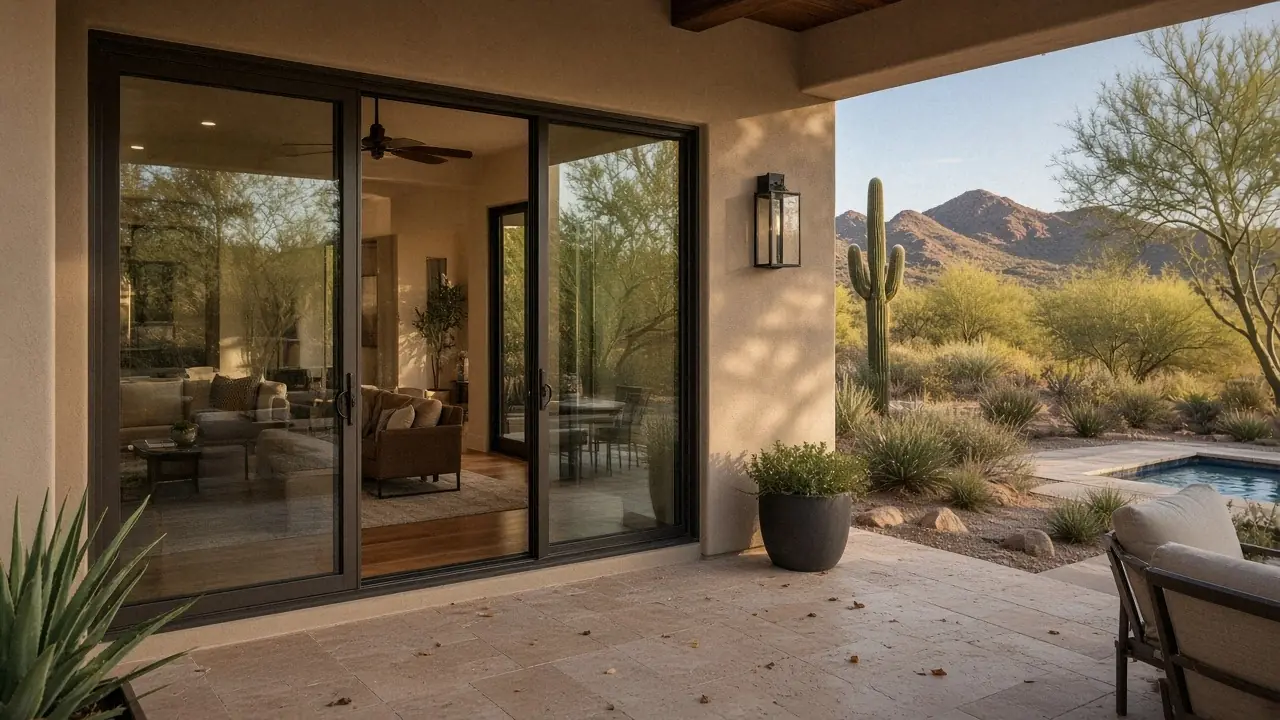
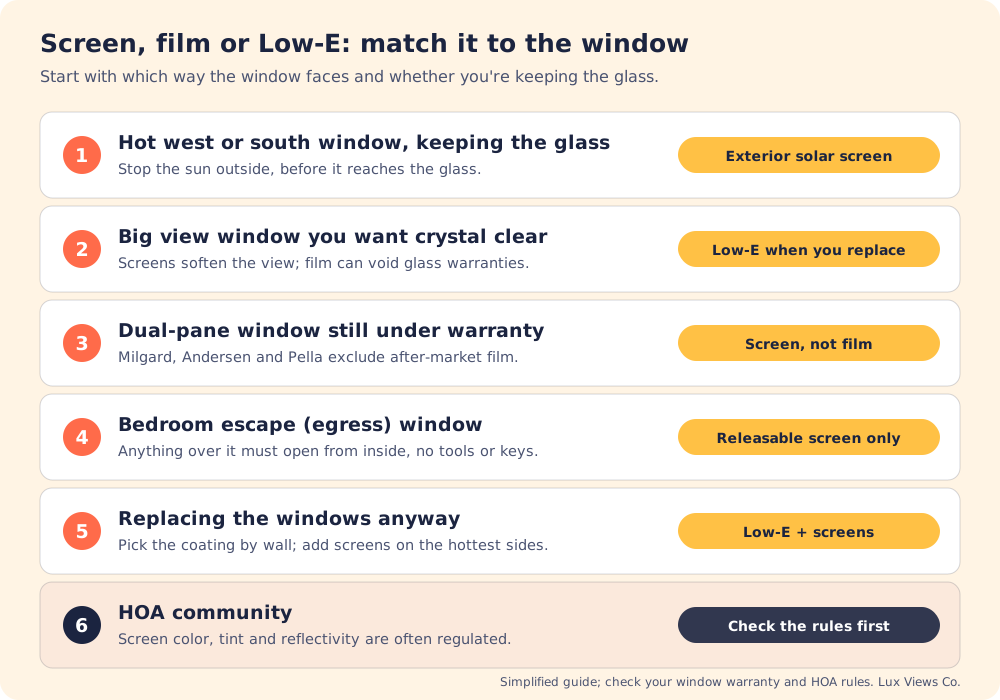
Short answer: they stop heat in three different places. An exterior solar screen catches the sun before it reaches the glass, which makes it the strongest add-on for a hot east, south or west window you're keeping. Window film works at the glass. On dual-pane windows it mostly cuts glare, and it can void the glass warranty. Low-E glass has the coating built into the sealed unit when it's made, so it's the long-term answer when you're replacing windows anyway. Many Valley homes end up using two of them: Low-E in new windows, plus screens on the hottest walls.
Where each one stops the heat
All three go after the same thing: solar heat gain, the share of the sun's energy that ends up inside as heat. The difference is where they intercept it, and that changes almost everything else about them.
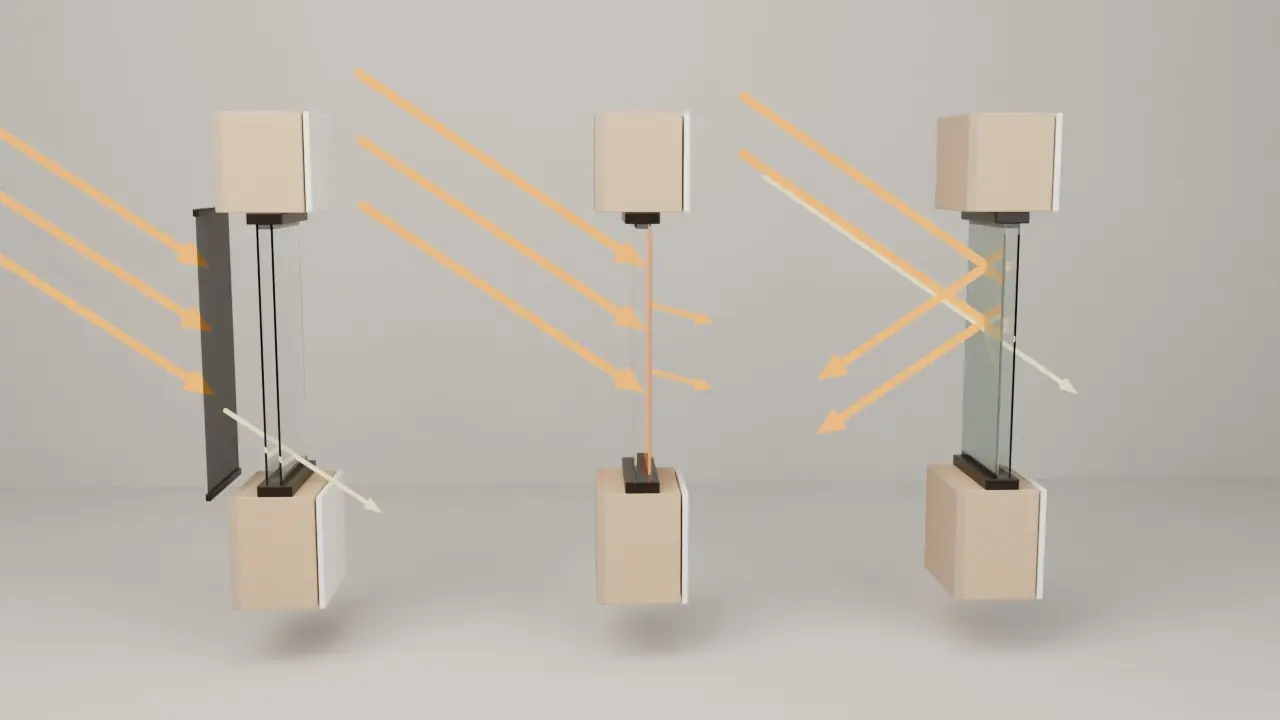
- Exterior screens sit outside the window, so the heat never reaches the glass. The federal Building America Solution Center notes that interior attachments can be less effective at reducing heat gain than comparable exterior shading, "because they do not block direct sunlight until after it has already passed through the window."
- Film is a thin polyester layer stuck to the glass. On a dual-pane window it goes on the room-side face (surface #4), which means the sun has already passed through both panes when it gets there. Pilkington, one of the big glass makers, puts it plainly in its technical bulletin ATS-113: film on the room-side surface of an insulating glass unit "only reduces solar glare. It does little to reduce solar heat gain."
- Low-E is a microscopically thin metal coating applied at the glass plant, inside the sealed unit. Hot-climate coatings sit on surface #2, the inner face of the outside pane, where they reflect much of the sun's infrared heat back out while passing visible light. Our Low-E glass comparison has the numbers for 366, 452+, 272 and the rest.
Solar screens: the strongest add-on for hot walls
A solar screen (also called a sun screen or shade screen) is a tightly woven fabric, usually vinyl-coated polyester, in a frame that mounts outside the window. Fabric makers rate them by how much sun they block. Phifer, a major screen-fabric maker, rates SunTex 80 and SunTex 90 at blocking up to 80% and 90% of solar heat and glare.
The federal research backs the idea. In a Department of Energy field study at the PNNL Lab Homes, exterior shades on three large west- and south-facing windows cut cooling energy by about 20% compared with the same windows left uncovered, and about 10% compared with interior vinyl blinds. The shaded rooms also ran 2 to 3 degrees F cooler (PNNL-30536). That test was in Richland, Washington, with motorized black shades, so treat it as a sign of what's possible, not a promise for your house.
What to weigh before you order:
- The view. You look through a fabric, so the view gets dimmer and slightly hazy, more so with the denser 90% weave. Look at real samples on your own window in afternoon sun before you choose a color and density.
- Ratings. The Attachments Energy Rating Council (AERC) certifies solar screens and gives each a Warm Climate Rating. In Arizona, that's the number to compare, and higher is better.
- Egress windows. A bedroom's emergency escape window has to open from inside without a key or tool. More on that below.
- Upkeep. Dust collects on the fabric and the frames need occasional attention, especially after a monsoon storm.
Screens also don't fix a failing window. If the glass is fogged between the panes or the frame leaks air, see foggy double-pane windows or fixing drafty windows first.
Window film: cuts glare, but check the warranty first
Film is popular because it's invisible from the street, keeps the view clear, and blocks UV. The catch is on dual-pane glass, which most Scottsdale and Paradise Valley homes now have.
Glass makers warn about two problems. First, heat stress. A sun-control film makes the inner pane absorb more of the sun's energy, and that pane's center gets much hotter than its edges, which sit cooler in the frame. Cardinal Glass Industries' bulletin IG04, "Use of Retrofit Films", explains that this temperature difference creates tension at the glass edge that can crack the pane. Second, seal failure. Film raises glass, gas-space and sealant temperatures, which Cardinal says can lead to premature failure of the sealed unit. That's the fogging covered in our foggy window guide.
Cardinal's position is blunt: it "does not recommend the use of retrofit films" and "will not warrant the IG units that have a retrofit film applied." Pilkington adds that film should never go over a surface #4 Low-E coating, because covering it cancels the coating's benefit. If your windows have Cardinal's LoĒ-i89 or a similar room-side coating, film is a bad match.
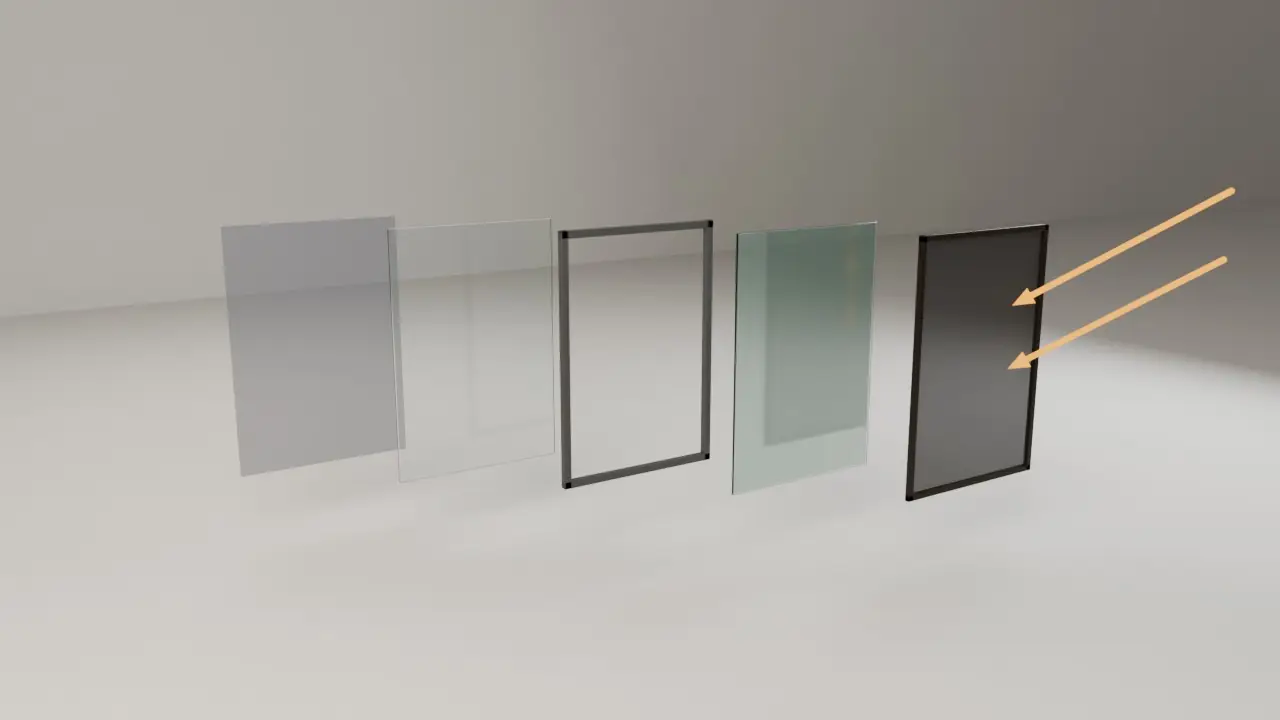
Window makers back that up in their warranties:
- Milgard's replacement product warranty (effective November 1, 2026) excludes "alterations or modifications of the Product, including... the application of tints, films." Milgard's FAQ also says tint can cause excessive heat that makes the glass unit fail early.
- Andersen's 400 and 200 Series warranty excludes failures related to glass tinting.
- Pella's vinyl window and patio door warranty excludes damage from after-market window films.
When can film make sense? Mainly for glare or UV on windows that are out of warranty, or on glass a film supplier has reviewed for your exact window. Pilkington's advice is to get the film maker's recommendation and assurances in writing before anything goes on the glass. If a window is old enough that you're weighing film to make it bearable, it may be time to price new windows instead.
Low-E glass: built in, permanent, and part of the window's rating
Low-E doesn't add anything to the outside of the house and doesn't change how you clean the window. It's part of the sealed unit, so its performance shows up on the window's NFRC label as the SHGC and U-factor.
For the Valley, triple-silver coatings such as Cardinal's LoĒ³-366 are the common default. Cardinal's own data for its standard 3/4-inch dual-pane unit lists a center-of-glass SHGC of 0.27 with 65% visible light. Its Quad LoĒ-452+ goes lower (0.22) for the hottest walls. The full comparison, including Vitro Solarban, is in our Low-E glass guide.
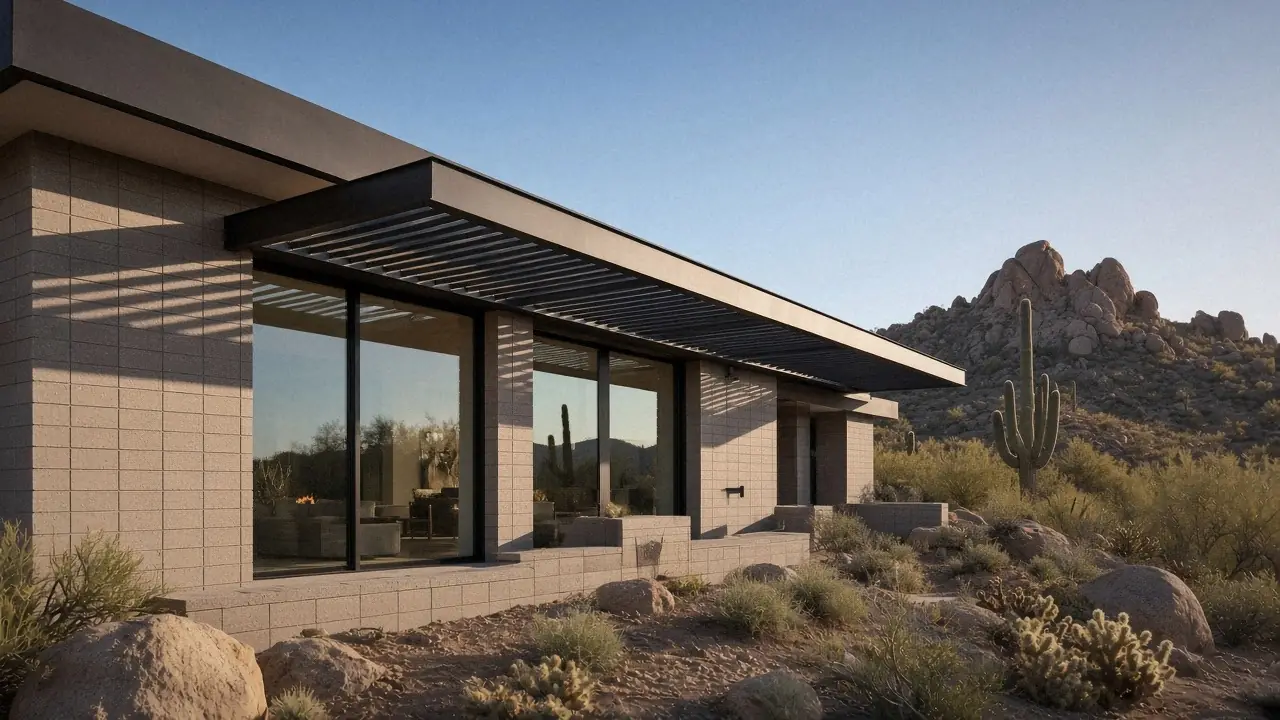
Low-E's limits: you only get it with new glass or new windows, and on a west wall with no overhang the glass still lets in some heat. That's why some homeowners pair new Low-E windows with screens on the two or three hottest openings. Exterior shading from deep overhangs, patio covers or shade trellises does the same job as a screen.
Side by side
| Exterior solar screen | Window film | Low-E glass | |
|---|---|---|---|
| Where it stops heat | Outside, before the glass | At the glass (room-side face on dual-pane) | Inside the sealed unit, surface #2 |
| Heat vs. glare | Strong on both in direct sun | Mainly glare on dual-pane, per Pilkington | Built into the window's NFRC SHGC |
| View | Dimmer, slightly hazy | Clear, can look tinted | Clear; stronger coatings look a bit grayer |
| Window warranty | Doesn't touch the glass | Milgard, Andersen and Pella exclude film damage | Covered as part of the window |
| Egress windows | Must release from inside, no tools | No effect | No effect |
| Curb look and HOA | Visible; color and mesh rules common | Reflective films often banned | Low-reflectance coatings usually fine |
| Best fit | Hot walls on windows you're keeping | Glare or UV on out-of-warranty glass, with written approval | New windows and doors |
SRP and APS rebates
If your electricity comes from SRP (Scottsdale and Paradise Valley homes are served by SRP or APS depending on the address, so check your bill), SRP's shade screen and window film rebate pays $1 per square foot. Per SRP's page and its terms and conditions (PDF):
- Screens must block at least 80% of solar heat gain and go on east-, south- or west-facing windows only, mounted on the exterior of clear glass windows that enclose an air-conditioned space.
- Motorized or retractable screens aren't eligible unless they're installed with photocell solar sensor equipment.
- Film must be NFRC-certified, on sunstruck windows only, with a maximum SHGC of 0.45 on double-pane and 0.40 on single-pane windows.
- Work has to be done by a contractor licensed by the Arizona Registrar of Contractors, or by you (DIY), and installed by April 30, 2027. Apply within six months of installation. SRP or its agent may inspect.
Note the "clear glass" wording. If your windows already have Low-E, ask SRP whether screens on them qualify before you count on the rebate. SRP's separate window replacement rebate covers new ENERGY STAR windows (U-factor 0.32 or lower, SHGC 0.23 or lower), as explained in our Low-E guide. APS customers should check aps.com for current offers before buying. Utility programs, amounts and deadlines change without notice, so confirm the current terms before you buy.
Bedroom windows: screens can't block the escape route
Every sleeping room needs an emergency escape and rescue opening, usually a window. The International Residential Code (R310.4.4 in the 2021 edition, which Scottsdale uses) allows bars, grilles, covers and screens over those openings only if the opening still meets its size rules and the device can be released or removed from inside without a key, tool or more force than it takes to open the window. A solar screen screwed to the stucco over a bedroom escape window doesn't meet that. Ask for a screen that releases from inside, and confirm with the City of Scottsdale or the Town of Paradise Valley if you're unsure.
HOA rules for screens and tint
Most Scottsdale master-planned communities regulate what goes on the outside of a window. From the official documents we've checked:
- McCormick Ranch: the MRPOA 2026 Rules and Regulations list sun/shade screens among projects the Executive Director can approve at staff level, and every project submits material samples, including awning/shade fabric.
- Windgate Ranch: screen mesh must be matte black or matte brown with at least 20% light penetration, frames finished to match the wall, window frame or casing; mirrored tint and reflective materials on windows are prohibited.
- McDowell Mountain Ranch: enclosures, shades, screens, tinting and awnings all need Design Review Committee approval.
- Grayhawk: window films may not be reflective, shade screens must be colored to suit the house, and the guidelines ask that west-facing windows be limited or shaded.
- Gainey Ranch: The Pavilions' standards call for insulated Low-E glass with no reflective, colored or film glass.
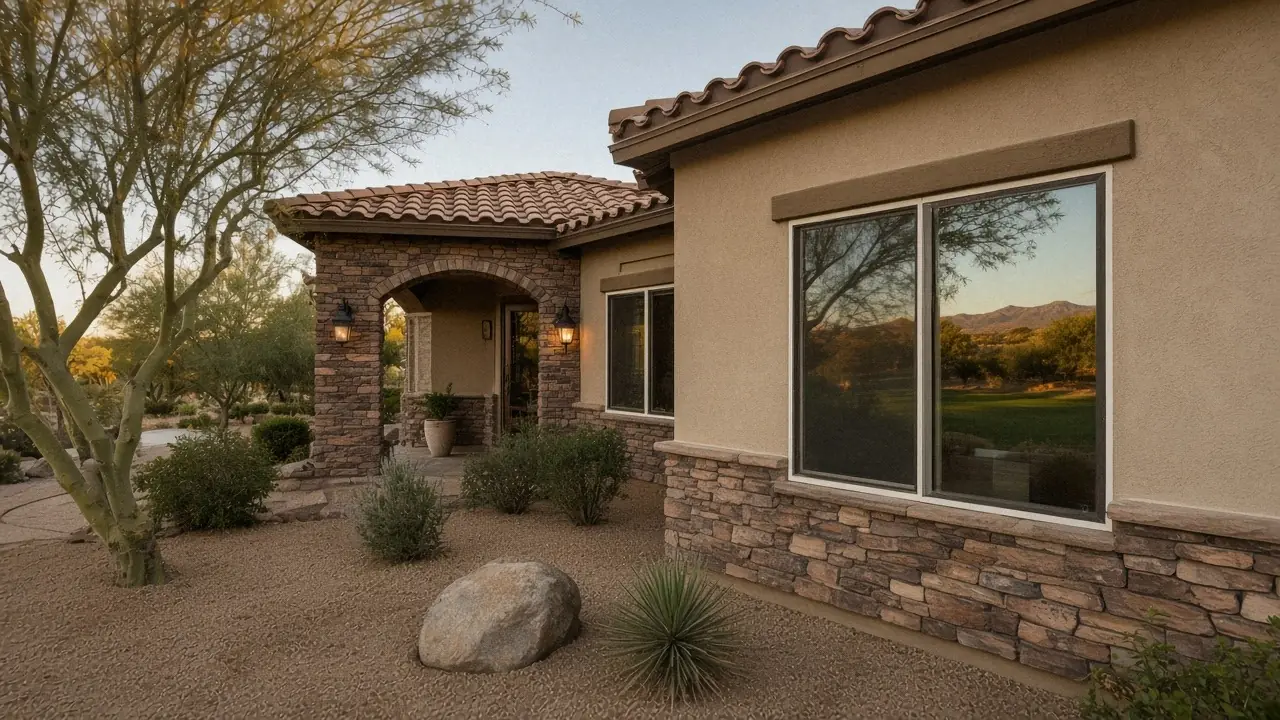
Rules change, so get the current documents before you order. Our Scottsdale HOA window rules directory compares the communities side by side.
Permits
The City of Scottsdale's Home Improvement page lists glass panes, hardware and trim among non-structural work that doesn't need a permit, while replacing windows takes a Minimum Window/Door Permit. Solar screens and film aren't named on that page, so if a screen involves anything structural, such as a motorized shade with new wiring, ask the city. In Paradise Valley, check with the Town's Building Division through its Citizen Portal.
Questions to ask before you buy
- Which way does each window face, and which ones actually take direct sun in the afternoon?
- For screens: what fabric and openness, what AERC Warm Climate Rating, and how do they mount and release on bedroom windows?
- For film: is it approved in writing by the film maker and my window maker for this exact glass? What does it do to my warranty?
- What Low-E coating do my current windows have, and on which surface? (Film over a surface #4 coating is a no.)
- If I'm replacing windows: which coating on which wall, and what are the NFRC U-factor and SHGC for each window?
- Does the product qualify for SRP's rebate, and who files the paperwork?
Get matched if new windows are the better fix
If your windows are old, fogged or drafty enough that you're shopping for film or screens just to make a room bearable, new dual-pane Low-E windows may solve more of the problem. Lux Views Co. is a free referral service, not a contractor. Fill out the short form below and we'll match you with licensed independent dealers who serve Scottsdale and Paradise Valley. Ask each one which coating they'd put on each wall, and whether they offer screens for the hottest openings.
Sources
- Pilkington North America: Technical Bulletin ATS-113, Field Applied Plastic Films and Coatings on Vision Glass (PDF, 04/2025)
- Cardinal Glass Industries: IG04, Use of Retrofit Films (PDF), LoĒ³-366 product page
- U.S. DOE / PNNL: Building America Solution Center, Window Attachments for Solar Control and Energy Efficiency, Evaluation of Exterior Shades at PNNL Lab Homes and Occupied Field Sites (PNNL-30536, PDF)
- Attachments Energy Rating Council: Reading the label, FAQ
- Phifer: SunTex 80/90 exterior solar screens
- Milgard: Replacement product warranty, effective 11-1-2026 (PDF), FAQ
- Andersen: 400 and 200 Series Owner2Owner limited warranty (PDF)
- Pella: Vinyl window and patio door limited warranty (PDF)
- SRP: Shade screen rebate, Shade screen/window film rebate terms and conditions (PDF), Window replacement rebate
- International Code Council: 2021 IRC R310.4.4, Bars, grilles, covers and screens
- HOAs: MRPOA 2026 Rules and Regulations (PDF), Windgate Ranch Design Guidelines (PDF), Grayhawk Design Guidelines, Gainey Ranch Pavilions Standards and Rules (PDF)
- City of Scottsdale: Home Improvement
Frequently asked questions
Are solar screens worth it in Arizona?
On windows that take direct east, south or west sun, usually yes. An exterior screen blocks the sun before it reaches the glass, which federal research says is more effective than shading on the inside. Phifer rates its SunTex 80 and SunTex 90 fabrics at blocking up to 80% and 90% of solar heat and glare. The trade-offs are a dimmer, slightly hazy view and screens you have to clean and maintain.
Is window tint or solar screens better for heat?
For heat, an exterior screen generally does more, because it stops sunlight outside. Pilkington's technical bulletin says sun-control film on the room-side surface of a dual-pane unit mainly cuts glare and does little to lower solar heat gain. Film keeps the view cleaner and is invisible from the street, so it can still make sense for glare, but check your window warranty first.
Can you put window film on Low-E windows?
Only with written approval from both the film maker and your window or glass maker. Film can raise glass and seal temperatures and cause thermal stress cracks or early seal failure, and Pilkington says film should never go over a surface #4 Low-E coating (such as Cardinal's LoE-i89) because it cancels the coating's benefit. Cardinal says it won't warrant glass units with a retrofit film applied.
Does window tint void my window warranty?
It can. Milgard's replacement window warranty (effective November 1, 2026) excludes alterations including applied tints and films, Andersen's 400 and 200 Series warranty excludes failures related to glass tinting, and Pella's vinyl warranty excludes damage from after-market films. Read the warranty for your exact product line before adding film.
Do solar screens qualify for the SRP rebate?
They can. SRP's shade screen and window film rebate pays $1 per square foot for screens that block at least 80% of solar heat gain, mounted outside clear-glass east, south or west windows on air-conditioned rooms, installed by April 30, 2027, with the application filed within six months. Retractable or motorized screens need a photocell sun sensor to qualify. Terms can change, so check SRP's page before you buy.
Can I put solar screens on bedroom windows?
Yes, but a bedroom's emergency escape window has to stay usable. The International Residential Code allows screens and covers over escape openings only if they release or remove from inside without a key, tool or extra force, and the opening still meets its size rules. A screw-mounted fixed screen over a bedroom escape window doesn't meet that.
Do I need HOA approval for solar screens in Scottsdale?
Often, yes. McCormick Ranch lists sun and shade screens among projects its Executive Director can approve at staff level, and wants a fabric sample. Windgate Ranch requires matte black or matte brown screen mesh with at least 20% light penetration. McDowell Mountain Ranch requires approval for screens, shades and tinting, and Grayhawk bans reflective films. Check your association's current rules first.